What Should I Look for in a Lion's Mane Supplement?

Walk into any health food store or scroll through any supplement marketplace and you'll find Lion's Mane everywhere. Capsules, powders, tinctures, gummies, the category has exploded. The problem? Most of these products have almost nothing in common beyond the name on the label.
Quality varies wildly. Some products are made from genuine fruiting body extracts with meaningful beta-glucan concentrations. Others are little more than dried mycelium grown on grain, with negligible amounts of the compounds that actually matter. Knowing the difference before you buy isn't complicated, but it does require knowing what to look for.
Fruiting Body vs. Mycelium: This Distinction Matters More Than You Think
Lion's Mane supplements fall into two broad camps: those made from the fruiting body (the actual mushroom) and those made from mycelium, which is essentially the root system grown on a grain substrate.
Fruiting body extracts are significantly richer in beta-glucans — the polysaccharides associated with Lion's Mane's studied effects on nerve growth factor (NGF) stimulation and cognitive support. Mycelium-based products, by contrast, frequently test high in alpha-glucans (starch from the grain substrate) rather than the beta-glucans you're actually paying for. Some manufacturers don't disclose which they're using. That should be a red flag.
Look for products that clearly state fruiting body on the label. If the label just says "mycelium biomass" or "full spectrum," dig deeper before committing.
Extraction Method: Why a Liquid Extract Changes Things
Raw dried mushroom powder is not an extract. An extract means the active compounds have been concentrated through a process, typically hot water extraction, dual extraction (water and alcohol), or similar methods, that breaks down the tough chitin cell walls and makes the beta-glucans and other compounds bioavailable.
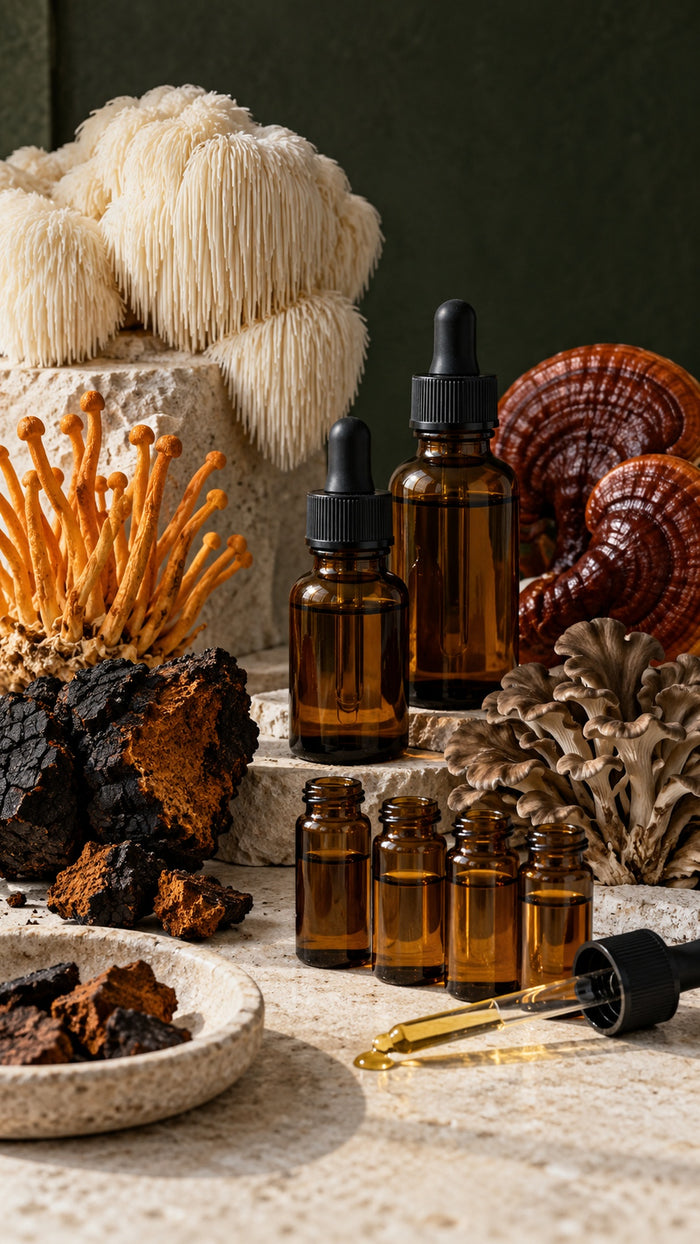
A Lion's Mane Liquid Extract takes this a step further. Liquid extracts are already dissolved and ready for absorption. There's no capsule to break down, no powder to digest, the compounds enter the bloodstream faster and more efficiently than capsule or powder formats. For anyone serious about bioavailability, this matters.
When evaluating any product, check: is it extracted or just dried and ground? If it's extracted, what's the ratio? A 10:1 extract means 10kg of mushroom went into producing 1kg of extract — a meaningful concentration difference.
Beta-Glucan Content: Ask for the Number
Beta-glucans are naturally occurring polysaccharides in Lion's Mane mushrooms and are commonly measured when assessing the composition of mushroom extracts. When choosing a supplement, look for brands that disclose their beta-glucan content and support their claims with independent laboratory testing.
Rather than relying on a general claim about a product's quality, check the actual beta-glucan percentage and how it is measured. Percentages reported by dry weight and by volume are not directly comparable. It's also worth checking whether the manufacturer reports beta-glucan content separately from total polysaccharides, as the two measurements represent different things.
Vital Vial's Lion's Mane Liquid Extract contains 3–4% beta-glucans by volume, with batch-specific third-party COAs to provide transparency about its composition. It is made from 100% fruiting body material using a proprietary biocatalyst-based triple-stage extraction process designed to maximise the recovery of naturally occurring bioactive compounds.
When comparing Lion's Mane supplements, look beyond a single percentage. Sourcing, extraction methods, testing and transparent labelling all help you understand what an extract actually contains.
Third-Party COA: Non-Negotiable
A Certificate of Analysis (COA) is a lab report from an independent, accredited testing facility that verifies what's actually in the product. It should confirm beta-glucan content, identify the absence of heavy metals (lead, arsenic, mercury, cadmium), and test for microbial contamination and pesticide residues.
The key word is independent. A COA from the manufacturer's own lab carries limited credibility. Look for testing done by NATA-accredited labs (in Australia) or equivalent internationally recognized bodies. The results should be batch-specific, meaning the COA matches the actual batch number printed on the product you're buying, not just a generic document from six months ago.
If a brand won't share their COA or buries it behind a contact form, that tells you something. Transparency around testing is a basic expectation of a credible supplement brand, not a premium feature.
Dosage: More Isn't Always Better, But Too Little Is Useless
The research on Lion's Mane has generally used doses between 500mg and 3,000mg of dried mushroom per day, with some studies using higher amounts over shorter periods. For an extract, the equivalent dose will be lower depending on the extraction ratio.
What this means practically: a product offering 100mg per capsule of a 1:1 raw powder is not comparable to 500mg of a 10:1 extract. Read the label carefully and work out the actual equivalent dose rather than comparing milligrams in isolation.
Liquid extracts allow more precise dosing than capsules and are easier to adjust up or down based on individual response. That flexibility is one of the practical advantages of the format.
What the Label Should Tell You (and What It Shouldn't Have to Hide)
A quality Lion's Mane supplement should, at minimum, clearly state:
- Whether it uses fruiting body, mycelium, or both
- The extraction method and ratio
- Beta-glucan percentage
- A batch-specific COA from an accredited third-party lab
- Actual dose per serving in context of extraction strength
Beyond that, watch for filler ingredients, proprietary blends that obscure individual amounts, and health claims that sound impressive but cite no research. The supplement industry is not heavily regulated, and marketing language is cheap. Data isn't.
The Short Version
Buy from brands that show their work. Fruiting body extract, verified beta-glucan content, a real COA from an accredited lab, and honest labeling are the baseline. Everything else is a bonus.
If you're looking at a Lion's Mane Liquid Extract and the brand can hand you a batch-matched COA with beta-glucan data from a NATA-accredited facility, you're in good shape. If they can't, or won't, keep looking.
Written by
Priyanka Mishra