Fruiting Body vs Mycelium: What's the Difference?

Fruiting Body vs Mycelium: What's the Difference?
When you pick up a Lions Mane supplement, two terms appear on almost every label: fruiting body and mycelium. They sound like interchangeable parts of the same mushroom. They are not. The distinction between these two structures goes to the heart of what makes a mushroom extract effective, and the data supporting each is substantially different.
This article answers the question precisely: what are fruiting bodies and mycelium, how do they differ in composition, and what does the research say about which one delivers higher concentrations of the bioactive compounds that matter for cognitive health?
What Is the Fruiting Body?
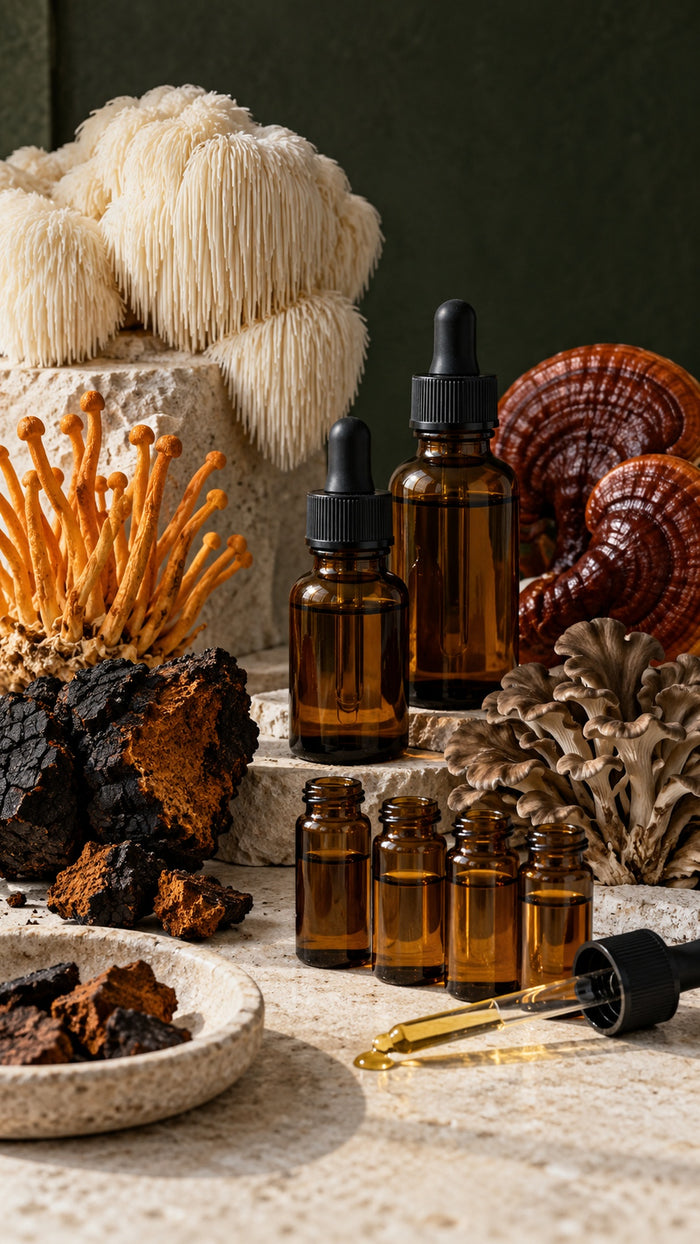
The fruiting body is the visible, above ground structure of the mushroom. It is what most people picture when they think of a mushroom: the cap, the stem, the distinctive cascading spines of Lions Mane. Botanically, the fruiting body is the reproductive organ of the fungal organism. It forms when environmental conditions are right and is responsible for producing and dispersing spores.
From a supplementation standpoint, the fruiting body is the part of the mushroom that has been used in traditional East Asian medicine for centuries. It is also the part examined in the majority of peer reviewed research on Lions Mane.
Key compounds found in fruiting bodies
- Beta glucans (particularly (1,3)(1,6) beta glucans): structural polysaccharides concentrated in the cell walls of the fruiting body
- Hericenones: aromatic compounds found exclusively in the fruiting body of Hericium erinaceus and shown to stimulate Nerve Growth Factor (NGF) synthesis
- Triterpenes: secondary metabolites present across mushroom species
- Ergosterol: a precursor to vitamin D2, found in higher concentrations in the fruiting body
What Is Mycelium?
Mycelium is the underground, root like network of thread structures called hyphae that make up the vegetative body of the fungus. It is the part of the organism responsible for nutrient absorption, decomposition of substrate, and growth. Without mycelium, there is no fruiting body.
In nature, mycelium is embedded in soil, wood, or organic matter. In supplement manufacturing, mycelium is typically cultivated on a grain substrate, most commonly oats or brown rice. This is where the data starts to diverge significantly from the fruiting body.
Key compounds found in mycelium
- Erinacines: diterpenoids found in the mycelium of Hericium erinaceus and demonstrated to cross the blood brain barrier and stimulate NGF synthesis in the central nervous system
- Beta glucans: present, but at substantially lower concentrations than in fruiting bodies, partly because mycelium cultivated on grain absorbs starch from the substrate
The Composition Data: Where the Numbers Diverge
The most consequential difference between fruiting body and mycelium products is not biology. It is what ends up in the final supplement.
Beta glucan concentration
Independent laboratory testing and peer reviewed analysis have consistently found higher beta glucan concentrations in fruiting body extracts compared to grain cultivated mycelium products. A 2017 analysis published in International Journal of Medicinal Mushrooms found that commercial mycelium on grain (MOG) products contained between 25% and 60% starch from the grain substrate, with beta glucan levels frequently falling below 5%. In contrast, fruiting body products in the same analysis averaged 15% to 40% beta glucans depending on the extraction method used.
This matters because beta glucans are the primary immunomodulatory and neuroprotective compounds in medicinal mushrooms. Starch is not bioactive in this context. A product with 60% starch is not a 60% active mushroom product.
NGF stimulating compounds
The picture is more nuanced when it comes to NGF stimulating compounds. Fruiting bodies contain hericenones. Mycelium contains erinacines. Both compound classes have been shown to stimulate NGF synthesis, but via different mechanisms and from different tissues. Research led by Kawagishi and colleagues demonstrated that erinacines from mycelium cross the blood brain barrier more readily than hericenones, which do not appear to cross the BBB directly but may stimulate peripheral NGF that indirectly benefits the central nervous system.
In practical supplement terms, the erinacine advantage of mycelium is often negated by the dilution caused by grain substrate content. If a product is 60% starch, the effective concentration of erinacines is a fraction of what the label weight suggests.
Alpha glucans vs beta glucans
Alpha glucans are starches. They come from grain substrate in mycelium products, not from the mushroom itself. High pressure liquid chromatography (HPLC) testing can distinguish alpha glucans from beta glucans. When reviewing a supplement certificate of analysis (COA), this distinction is critical: total polysaccharide content is not a proxy for beta glucan content, and many undisclosed products report only total polysaccharides to obscure low beta glucan levels.
What the Research Actually Studied
Understanding the research base is essential to evaluating marketing claims.
The most cited human clinical trials on Lions Mane and cognitive function used fruiting body preparations. The 2009 double blind placebo controlled trial by Mori and colleagues, published in Phytotherapy Research, used a standardised fruiting body powder at 3g per day and observed statistically significant improvements in cognitive function scores over 16 weeks in adults with mild cognitive impairment.
A 2023 randomised controlled trial published in the Journal of Nutritional Science used a fruiting body extract and found significant improvements in scores on the Brief Assessment of Cognition within 60 minutes of a single dose in healthy young adults.
Most mycelium focused studies are preclinical (cell or animal models). The human data base for fruiting body preparations is meaningfully larger and more robust at the time of publication.
How to Tell Which Your Supplement Contains
Labels are not always clear. Here is what to look for:
- The COA: request or check for a certificate of analysis that lists beta glucan percentage separately from total polysaccharides. A reputable brand publishes this per batch.
- Substrate disclosure: if the label does not disclose whether mycelium was cultivated on grain, and the brand does not answer when asked, treat that as a signal.
- Extraction ratio: a 10:1 extract from mycelium on grain is not equivalent to a 10:1 extract from fruiting body. The ratio describes concentration from source material. If the source material is 60% starch, you are concentrating starch.
- Country of origin and production method: most fruiting body mushrooms used in supplements are cultivated in China or other Asian countries under controlled agricultural conditions. North American mycelium products are often produced via grain fermentation and are not equivalent.
For a deeper breakdown of what extraction methods reveal about supplement quality, see Inside Extraction Science. For guidance on what batch testing should actually disclose, see What Batch Testing Should Reveal.
Why Whole Raw Material Matters
The choice of source material, fruiting body or mycelium, is only one variable. What happens before and after extraction also shapes the final compound profile. For an explanation of why starting with whole, unprocessed mushroom material affects the extract you end up with, see Why Whole Raw Material Matters.
What to Look For in a Lions Mane Extract
When evaluating a Lions Mane supplement, the following criteria are grounded in the research above:
- Fruiting body as the primary or sole source material
- Beta glucan content confirmed by independent testing, ideally around 3-4% on a dry weight basis
- Dual extraction (water and ethanol) to capture both water soluble beta glucans and alcohol soluble hericenones
- Published COA per batch, not a single historical document
- No undisclosed grain or starch fillers
For a comprehensive guide to evaluating Lions Mane extracts against these criteria, see Lions Mane Extract: What Should You Look For? and the foundational overview in What Is Lions Mane Mushroom?
The Vitalvial Approach
The Vitalvial Lions Mane Liquid Extract is made exclusively from fruiting body material. The extract is obtained by bio-catalyst based triple extraction to preserve both beta glucan and hericenone fractions, and each batch is independently tested with results published per production run. The beta glucan concentration is confirmed by indeoendant analysis, not estimated from total polysaccharide content.
If you are choosing between a fruiting body and a mycelium product, the data is clear on what to prioritise. Source material determines active compound concentration. Active compound concentration determines whether the supplement delivers the effect you are looking for.
Frequently Asked Questions
Is fruiting body always better than mycelium?
For beta glucan content and alignment with the human clinical research base, fruiting body preparations have a stronger evidence profile. Mycelium contains erinacines not found in the fruiting body, but grain cultivated mycelium products frequently contain high levels of starch that dilute active compound concentration significantly.
Can a supplement contain both fruiting body and mycelium?
Yes. Some products blend both to capture hericenones and erinacines. The key question is whether each fraction is tested independently and the beta glucan content reflects mushroom derived material rather than grain starch.
What beta glucan percentage should I look for?
Based on the research literature, a fruiting body extract with independently verified beta glucan content around 3-4% is considered a meaningful threshold. Products below 0.5-1% beta glucans are unlikely to deliver the effects observed in clinical trials.
Does mycelium have any advantages?
The erinacine content of mycelium is a genuine distinction from a mechanistic standpoint. Erinacines have been shown to cross the blood brain barrier in animal models. However, the clinical human evidence for erinacine specific effects remains limited compared to the fruiting body literature.
How do I verify what is in my supplement?
Request the certificate of analysis from the brand. Look for beta glucan percentage (not total polysaccharides), confirm it was tested by an independent ISO accredited laboratory, and check whether the test method distinguishes alpha glucans from beta glucans.
Written by
Priyanka Mishra